Catching grayling in winter, ‘It ain’t Rocket Science’!
For many years, grayling fishing in winter was largely ignored in the UK. Once temperatures dropped and frost set in, most anglers believed the season was effectively over. Grayling were known to be present in rivers, but there were few reliable methods for catching them consistently in cold conditions. As a result, some outstanding winter fishing opportunities were missed simply because anglers did not yet have the right techniques.
Everything changed in the late 1980s and early 1990s with the influence of European anglers, particularly those from the Czech Republic. These anglers introduced what became known as heavy or “Czech” nymphing. The effectiveness of this approach became impossible to ignore after it was used to devastating effect during the World Fly Fishing Championships on the River Dee in Wales in 1990. Almost overnight, winter river fishing in the UK was transformed.
Since then, there has been no looking back. When the trout season ends, attention turns straight to grayling. Nymph fishing through the winter months is now firmly established and widely practised. For many anglers, myself included, there is something deeply satisfying about targeting grayling in the coldest part of the year. Standing waist-deep in icy water, fingers numb, concentrating hard on every drift, brings a strange but undeniable sense of enjoyment. It is demanding, often uncomfortable, yet incredibly rewarding.
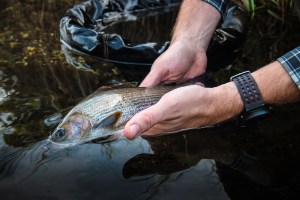
Grayling Behaviour
One of the most common mistakes anglers make when switching from trout to grayling is assuming the two species behave in the same way. While they share the same rivers, their habits are quite different, especially in winter. Understanding these differences is key to consistent success.
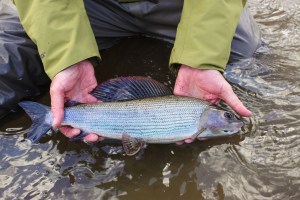
Grayling are far more tolerant of cold water than trout. In fact, they often feed more confidently as temperatures drop. They are also much more likely to gather in groups, known as shoals, particularly after prolonged frosts. These shoals can be surprisingly large, sometimes holding dozens or even hundreds of fish, depending on the size and character of the river.
Another important difference is where grayling position themselves in the water. While trout may spread themselves throughout a river, grayling are almost always found close to the riverbed. They hold station in steady, even flows where food is delivered to them consistently. After hard frosts, it is common to find long stretches of river that appear lifeless, only to discover one or two concentrated areas holding the vast majority of the fish.
Within these shoals, larger grayling are often found at the head, though this is not always the case. Grayling are also less wary than trout, allowing anglers to get relatively close. However, they will not tolerate heavy-footed wading or careless movement. Once disturbed, grayling tend to move upstream rather than downstream, a detail that becomes important when fishing amongst a shoal repeatedly.
When a fish is hooked, it is important to play it firmly and guide it downstream, away from the rest of the shoal. This allows you to catch several fish before the group becomes fully aware that something is wrong. If the fishing suddenly goes quiet, it is often best to give the area time to settle before returning, starting above the shoal and working back down.
The Czech Nymphing Method
My preferred method for grayling fishing, even after many years, is Czech nymphing. In Scotland, it is often referred to simply as “bugging.” At its heart, this technique is straightforward and does not need to be overcomplicated.
The traditional setup involves fishing a short line with two or three heavily weighted nymphs. These flies are designed to get down quickly and stay close to the riverbed. The angler stands side-on to the current, roughly at a right angle to the flow, and fishes directly under the rod tip. Drifts are short and controlled, allowing maximum contact with the flies at all times.
In its simplest form, Czech nymphing is about two things: presentation and bite detection. The goal is to present the flies as naturally as possible while maintaining direct contact so even the slightest touch can be felt. There is no single perfect formula, and success comes through experimentation, observation, and practice.
Short lines are a major advantage. Less line in the water means less sag, fewer conflicting currents, and much better control. The flies drift naturally, without being dragged or lifted unnaturally by surface currents. This close-quarters approach makes Czech nymphing one of the most effective and reliable ways to target grayling, especially in winter.
Tackle and Fly Choice
My typical setup is simple. I use a seven-foot leader with three flies spaced about two feet apart, with the heaviest fly on the point. The rod is a Vision 10ft 3-wt, maybe longer, never shorter. When fishing directly under the rod tip, managing three flies is straightforward, and tangles are rarely an issue.
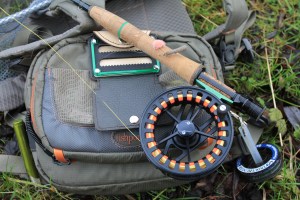
Flies do not need to be complicated. In fact, simple patterns are often best. Grayling are attracted to flashy materials and bright colours, particularly in cold, slightly coloured water. A small selection of proven patterns is more than enough to cover an entire winter season.
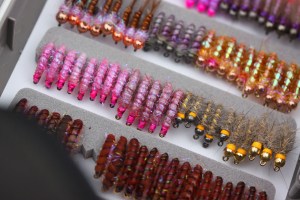
This simplicity is one reason why I rely on this method when teaching anglers who are new to grayling fishing. It is easy to learn, quick to understand, and extremely effective.
Fishing the Perfect Pool
One of my favourite grayling pools is a long, steady stretch of river that I visit several times each year. It regularly produces large numbers of fish and can be fished for hours at a time. The flow is gentle but consistent, the depth even, ranging from thigh to waist deep, which I consider ideal for winter grayling.
The pool is vast, stretching for hundreds of yards, and holds grayling throughout its length. However, finding them is the challenge. The pool is well known and heavily fished, meaning the grayling see plenty of pressure. Despite this, I have developed a reliable approach that works time and again.
The Zig-Zag Approach
To fish a large pool effectively, I use a systematic zig-zag method commonly seen in competition fishing. This approach allows you to cover every inch of water while also subtly encouraging fish to move toward your position.
Starting at the top of the pool, I work downstream in a controlled pattern. From my position, I cast the flies slightly upstream and track them back with the rod tip, allowing them to drift naturally. As the line tightens at the end of the drift, the flies lift. This moment often triggers aggressive takes, which are usually obvious due to the short line and tight contact.
To cover the pool properly, imagine drawing a zig-zag line across the water. Start near the bank and gradually work out as far as wading depth allows. Once you reach the outer limit, step back toward your starting point, move a couple of steps downstream, and repeat the process.
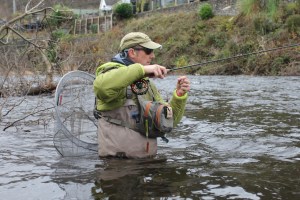
When you locate a shoal, careful fish handling becomes essential. After hooking a fish, sweep the rod away from the shoal and turn to face upstream. This moves the fish into softer water, making it easier to land. Stay in the same position while landing the fish. Once unhooked, release it slightly upstream, then return to your fishing spot quickly.
Grayling often swim straight upstream after release, so this method helps keep the shoal in place. When action slows, return to the top of the pool and repeat the process, changing flies if necessary.
Final Thoughts
Fishing for grayling in winter using these methods has been proven effective for decades. Many anglers have used this approach successfully for over twenty years, and it remains as reliable today as ever. When winter arrives, Czech Nymphing is still, in my opinion, the most effective way to target the “lady of the stream.”
Want to learn more? Check out this article I created for GUIDEFLYFISHING
 Steve Cullen - Fly Fishing